Teaching Number 5 Sounds
Teaching number 5 sounds can be a fun and playful part of your homeschool day, using simple activities, counting words, books, and everyday moments to help young learners connect with the number 5. From five stars and five blocks to five ducks and five balloons, the number 5 gives young learners simple ways to hear, say, and explore early number concepts through playful everyday moments at home. Learning the number 5 can feel natural when it is tied to simple routines, hands-on play, and objects children already know. With a mix of fun books, easy crafts, and real-life practice, toddlers and preschoolers can begin building confidence with the number 5 in a gentle and meaningful way.
Teaching number 5 sounds is fun with easy activities, counting words, books, crafts, and printables for toddlers and preschoolers. From five stars and five blocks to five ducks and five balloons, the number 5 gives young learners simple ways to hear, say, and explore early number concepts through playful everyday moments at home. Learning the number 5 can feel natural when it is tied to simple routines, hands-on play, and objects children already know. With a mix of fun books, easy crafts, and real-life practice, toddlers and preschoolers can begin building confidence with the number 5 in a gentle and meaningful way.
Number 5 sounds are fun to teach with easy activities, counting words, books, crafts, and printables for toddlers and preschoolers. From five stars and five blocks to five ducks and five balloons, the number 5 gives young learners simple ways to hear, say, and explore early number concepts through playful everyday moments at home. Learning the number 5 can feel natural when it is tied to simple routines, hands-on play, and objects children already know. With a mix of fun books, easy crafts, and real-life practice, toddlers and preschoolers can begin building confidence with the number 5 in a gentle and meaningful way.
Teaching kids to say the number 5 can be simple, playful, and full of real-life learning moments. The number 5 shows up in familiar ways throughout the day, making it a fun next step for toddlers and preschoolers.
Teaching the number 5 can be a fun and playful part of your homeschool day. The number 5 is wonderful for young learners because it helps children begin noticing small groups of five, saying the word five, and connecting the spoken number to the written numeral 5.
For toddlers and preschoolers, learning numbers works best when it feels natural, hands-on, and connected to real life. Whether your child is holding five toys, seeing five birds outside, or picking five crackers for snack time, there are so many simple ways to bring the number 5 to life.
In this post, we’ll look at easy ways to help little learners hear, recognize, and enjoy the number 5 through simple words, playful activities, books, and everyday learning at home.
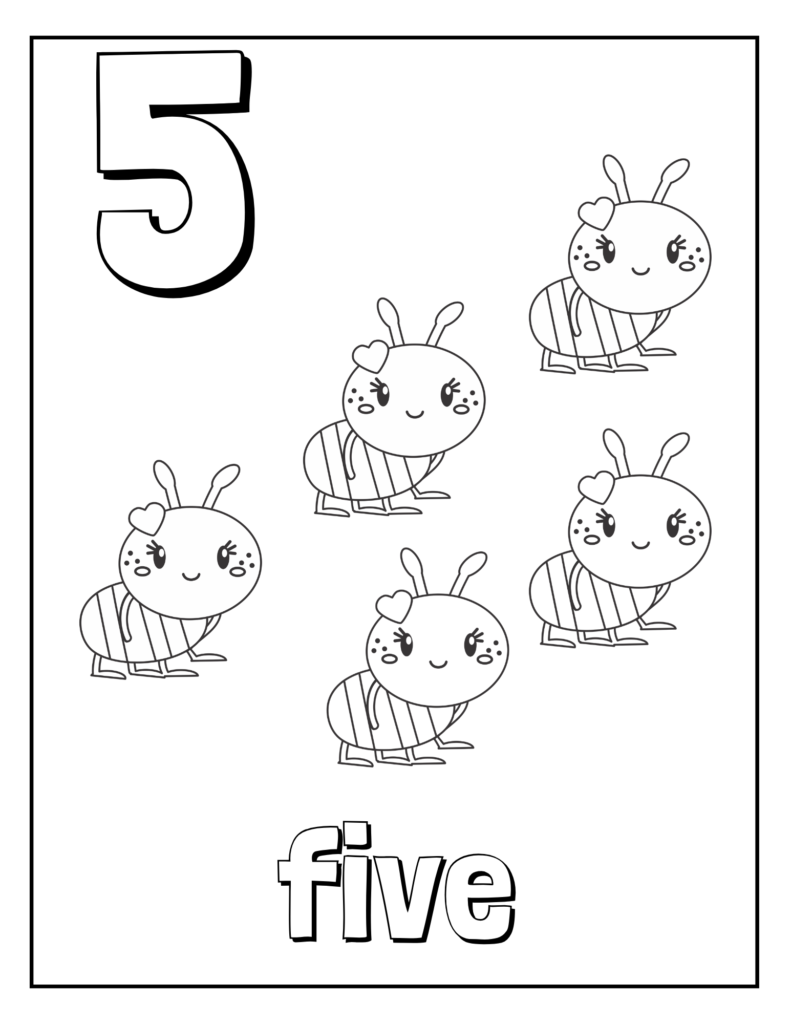
Why Teaching the Number 5 Matters
Learning numbers is an important first step in early math. Before children begin counting bigger groups, they first need to understand what numbers mean.
The number 5 is helpful to teach because it introduces the idea of five objects together. When children begin hearing and saying five while pointing to five items, they start building early number recognition and counting confidence.
These small connections help make early math feel meaningful and memorable.
The Meaning of the Number 5
The number 5 means five things.
Children can begin to understand the number 5 by seeing and hearing examples like:
five balls
five cups
five stars
five toys
five books
five spoons
five flowers
five apples
five teddy bears
five shoes
For toddlers and preschoolers, it helps to focus on just a few simple examples at first, especially objects they can see and touch easily.
Try saying the number slowly:
“Five balls.”
“Five books.”
“Five stars.”
“Five teddy bears.”
These simple number moments can help children begin understanding what the number 5 means in a fun and relaxed way.
Teaching Number 5 Sounds Through Real-Life Play
Young children learn best when numbers are connected to things they already know. The number 5 is a great one to teach because it shows up naturally in toys, snacks, counting games, and everyday routines.
You might naturally use the number 5 while talking about:
five toys on the floor
five books at storytime
five grapes at snack time
five crayons on the table
five blocks in a tower
five hugs before bed
When children hear the word five in playful, familiar settings, they start noticing what it means. That repetition helps the number 5 feel easier and more natural to remember.
Instead of making it feel like a formal lesson, you can keep it light by using books, conversation, crafts, and simple daily moments.
Easy Number 5 Examples for Toddlers and Preschoolers
When introducing the number 5, it helps to choose examples that are simple, visual, and easy to repeat.
Here are some easy ways to practice the number 5:
five stars
five shoes
five toys
five cups
five books
five balls
five flowers
five apples
five bears
five ducks
You do not need to teach all of these at once. Pick just a few and repeat them naturally throughout the week.
You might say:
“Here are five balls.”
“Can you hold five books?”
“I see five stars.”
“You have five teddy bears.”
Those little moments of repetition can help children hear and remember the number 5 more easily.
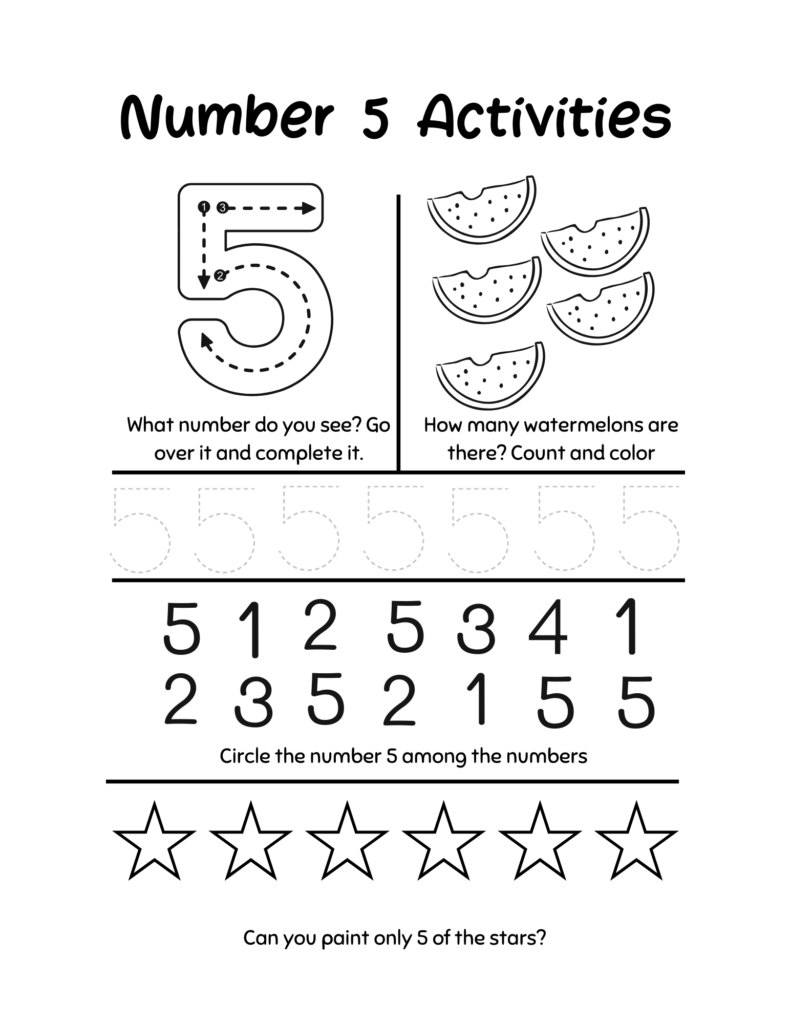
Fun Number 5 Activities for Toddlers and Preschoolers
Hands-on play is one of the best ways to help little learners remember a new number.
5 Is for Five Stickers
Give your child five stickers and say the number together. This is a simple way to connect the word five to real objects.
Five Toy Basket Game
Place a few toys in front of your child and ask them to choose five toys. Repeat the number 5 as they pick.
Five Finger Painting
Let your child dip all five fingers in paint and make prints on paper. This is a playful sensory way to connect with the number 5.
Five Balloon Craft
Make a simple picture with five balloons on it. Talk about the number 5 while your child colors or glues.
Five Block Building
Have your child place five blocks on the floor or table. Then say, “That is five.”
Number 5 Tracing
Practice tracing the number 5 with crayons, markers, or fingers in sand, salt, or shaving cream.
Songs and Rhymes for the Number 5
Songs and rhymes help children hear and remember a number again and again in a playful way.
Try this simple rhyme:
Five is fun, five is bright,
Five little stars shine at night.
Or this one:
Five little balls,
Five little stars,
Five little teddy bears,
Near and far.
These short rhymes can make the number 5 feel more familiar and easier to remember.
Books That Reinforce Learning the Number 5
Reading together is a simple and meaningful way to reinforce learning the number 5. Books that include counting, simple objects, and early number concepts can help toddlers and preschoolers hear and understand the word five in a fun and natural way. As you read, pause to point out five items on the page and repeat the number. These little moments can help build early number recognition while making storytime even more engaging.
Here are five books that can work well for reinforcing the number 5:
Five Little Monkeys Jumping on the Bed
A fun and rhythmic book that naturally reinforces the number 5 through repetition and counting.
Five Little Ducks
A classic counting book that helps children hear and practice the number 5 in a playful way.
Five Busy Five Bunnies
A cute and simple book that helps children connect the number 5 with playful bunny characters and everyday actions
Five Silly Snowmen
A fun seasonal counting book that introduces the number 5 through repetition and playful rhymes.
Five Swishy Fish
A bright and engaging counting book that helps reinforce the number 5 with simple underwater themes kids enjoy.
FAQ: Teaching Number 5 Sounds
How do I teach my child to say the number 5?
You can teach your child to say the number 5 through books, songs, crafts, and simple daily routines. The key is to keep it fun and repeat the word five often.
What does the number 5 mean for preschoolers?
The number 5 means five objects together. It helps children begin understanding that numbers represent how many things there are.
What are some easy ways to teach the number 5?
Easy ways to teach the number 5 include pointing to five toys, giving five snacks, reading counting books, tracing the number 5, and doing simple five-item activities.
Is the number 5 easy for toddlers to learn?
Yes, the number 5 is a great early number for toddlers and preschoolers to begin learning because it connects to small groups and simple counting practice.
What are fun number 5 activities for toddlers?
Fun number 5 activities include five sticker play, five balloon crafts, five toy pick-up games, five finger painting, and tracing the number 5.
Do I need worksheets to teach the number 5 at home?
No, worksheets are not required. Young children often learn best through play, books, songs, movement, and conversation. Printables can simply be a helpful extra.
How long should a number 5 lesson be?
Short lessons are usually best. Even 5 to 15 minutes of playful learning can be enough for toddlers and preschoolers.
What age should children learn the number 5?
Many children begin learning early numbers between ages 2 and 4. At this stage, the goal is to help them become familiar with the spoken word five, the numeral 5, and the idea of five objects.
How can I help my child remember the number 5?
Repeat the word five often, read counting books, do hands-on activities, and point out groups of five in everyday life.
Is it normal if my child mixes up numbers?
Yes, that is completely normal. Toddlers and preschoolers are still learning how numbers work, so gentle repetition and playful practice are best.
What are the best everyday ways to reinforce the number 5?
You can reinforce the number 5 by talking about five toys, five books, five grapes, or five blocks during daily routines.
Final Thoughts on Teaching Number 5 Sounds
Teaching kids to say the number 5 can be simple, playful, and full of meaningful little moments. From five toys and five books to five stars and five balloons, there are many fun ways to help toddlers and preschoolers connect with the number 5 in everyday life.
By using books, hands-on activities, easy examples, and playful repetition, you can help your child grow more confident with the number 5 without making learning feel overwhelming.
Keep it light, keep it fun, and let learning happen naturally through the little moments you already share each day.
If you like this post, make sure to check out our teaching number 4 sounds here!