Number Recognition Activities to Help Preschoolers Build Early Math Skills
Learning numbers is one of the first big steps children take on their early math journey. Before children can add, subtract, or solve math problems, they need to understand what numbers look like and what those numbers represent.
Number recognition is the ability to identify a number by sight and connect it to its meaning. When a child sees the number 3 and understands that it represents three objects, they are building an important foundation for future math success.
While learning to recognize numbers may seem simple, this skill helps children develop confidence, number sense, and the ability to understand how numbers work in everyday life.
What Is Number Recognition?
Number recognition is more than memorizing what a number looks like. It involves helping children understand the connection between a numeral and the quantity it represents.
For example, a child learning number recognition should begin to understand that:
- The symbol 5 represents five objects
- Numbers follow a specific order
- Numbers can tell how many items are in a group
- Numbers can represent information such as ages, addresses, or dates
This early understanding helps children move beyond simply repeating numbers and begin developing true mathematical thinking.
Why Number Recognition Is Important for Early Math Development
Number recognition is one of the building blocks of early math skills. Children who develop a strong understanding of numbers are better prepared for future concepts such as addition, subtraction, counting, and problem-solving.
When children can quickly identify numbers, they can focus more attention on solving math problems instead of trying to figure out what each numeral means.
Developing number recognition helps children:
- Build number sense
- Improve counting skills
- Understand quantities
- Recognize patterns
- Prepare for kindergarten math concepts
- Develop confidence when working with numbers
Just like learning letters helps children prepare for reading, learning numbers helps children prepare for mathematics.
Fun Number Recognition Activities for Preschoolers
Young children learn best when learning feels like play. Hands-on activities give children opportunities to practice identifying numbers while keeping them engaged and excited.
Here are some simple number recognition activities that can be used at home or in the classroom.
Number Matching Activities
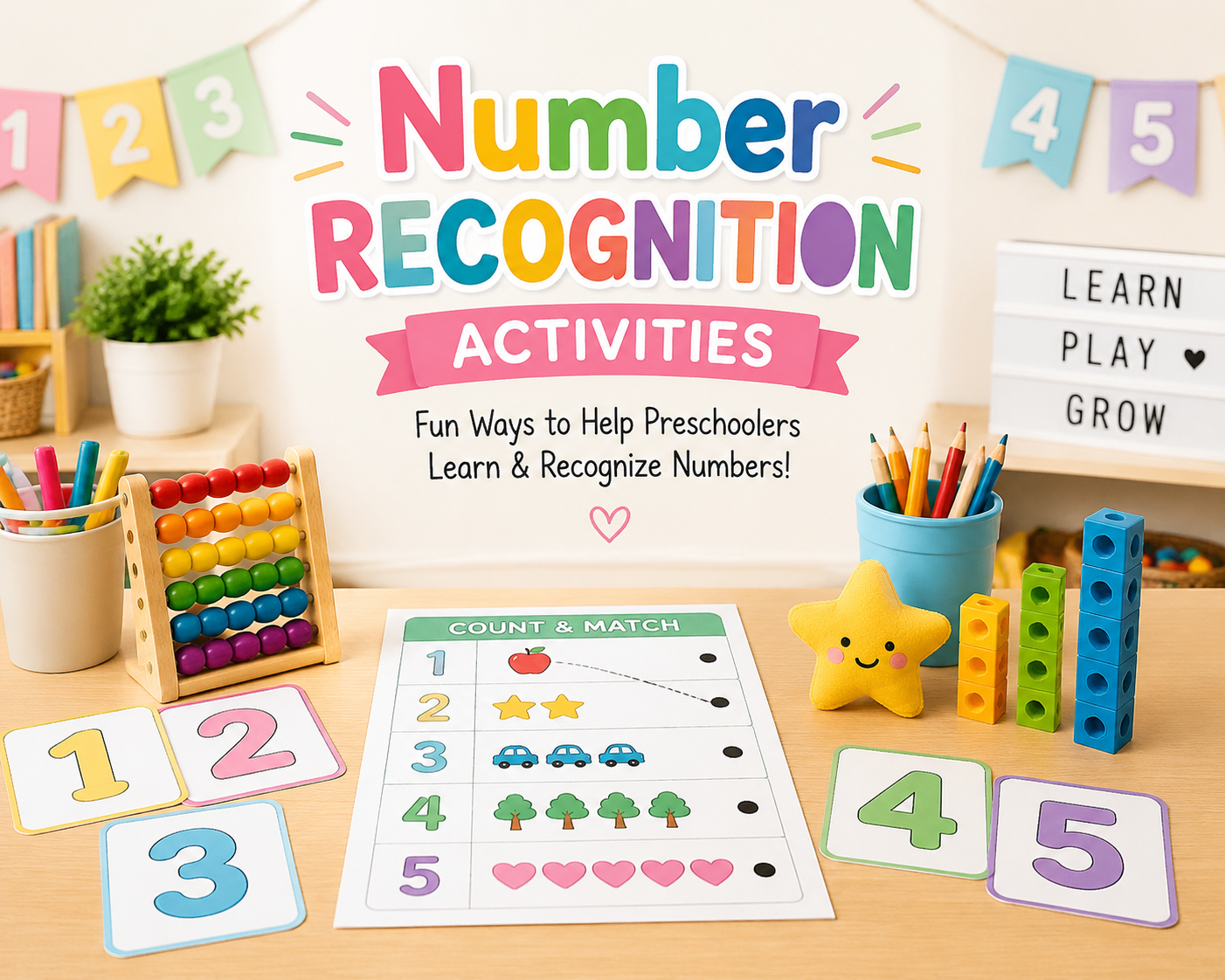
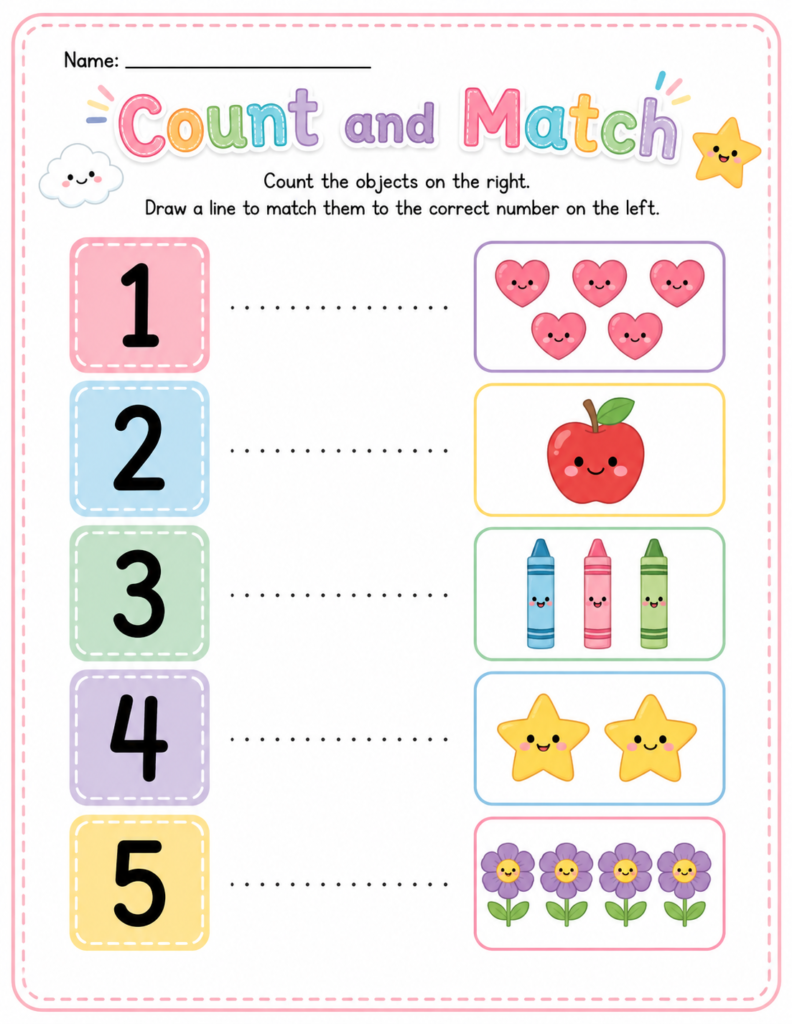
Number matching games are a great way to help children connect numerals with quantities.
Children can match:
- A number card to a group of objects
- A numeral to a ten frame
- A number to a picture showing the correct amount
For example, a card with the number 4 can be matched with a picture of four apples, four stars, or four blocks.
These activities help strengthen the connection between seeing a number and understanding what it means.
Color by Number Activities
Color by number worksheets combine creativity with math practice. Children identify each number and use the matching color to complete the picture.
These activities help children practice:
- Recognizing numerals
- Following directions
- Improving fine motor skills
- Strengthening attention and focus
The excitement of watching a picture appear makes learning numbers feel like a fun challenge instead of a worksheet assignment.
Number Recognition Games
Games are another great way to make number practice enjoyable. Simple activities like number hunts, matching games, and number scavenger hunts allow children to practice without feeling like they are doing a lesson.
Some ideas include:
- Finding numbers hidden around the room
- Rolling a dice and matching the number
- Searching for numbers in books or magazines
- Building towers with the correct number of blocks
These playful experiences help children see numbers as something they use every day.
Helping Children Who Struggle With Number Recognition
Every child develops skills at their own pace. While some children quickly recognize numbers, others need additional practice and repetition before the connection becomes automatic.
A child who struggles with number recognition may:
- Confuse similar-looking numbers
- Forget numbers they have already learned
- Have difficulty matching numbers with quantities
- Need extra time to remember number sequences
Consistent practice through games, songs, movement activities, and hands-on learning can help strengthen these skills.
For some children, ongoing challenges with understanding numbers may be related to a learning difference such as dyscalculia, which affects how the brain processes mathematical information. If concerns continue, discussing them with a child’s teacher or educational professional can provide helpful guidance.
Celebrating Number Learning Milestones
Learning numbers is a big accomplishment, and celebrating progress helps children stay motivated.
Special activities such as:
- 100th Day of School number activities
- Number-themed crafts
- Counting challenges
- Math games
- Number puzzles
give children opportunities to use their skills in meaningful ways.
For example, a mystery picture color-by-number activity allows children to identify numbers, follow directions, and create a finished picture they can feel proud of.
These moments help children realize that math is something they can understand and enjoy.
How Parents and Teachers Can Support Number Recognition Skills
The best number practice often happens during everyday moments. Children are surrounded by numbers all around them, making daily routines perfect opportunities for learning.
Try pointing out numbers during activities such as:
- Looking at house numbers
- Counting snacks
- Reading page numbers
- Setting the table
- Counting toys during cleanup
- Looking at a calendar
The more children see and use numbers in real-life situations, the more comfortable they become with them.
Frequently Asked Questions About Number Recognition
What age should children learn number recognition?
Most children begin developing number recognition skills during the preschool years, often between ages 3 and 5. Children may start by recognizing a few familiar numbers and gradually learn to identify more numbers as they practice through play, songs, books, and hands-on activities.
What is the difference between counting and number recognition?
Counting and number recognition are related but different skills. Counting is the ability to say numbers in order, while number recognition is the ability to look at a numeral and know what number it represents. A child may be able to count to 10 but still need practice identifying the written numbers 1 through 10.
How can I help my child practice number recognition at home?
There are many simple ways to practice number recognition during everyday activities. Try pointing out numbers on calendars, signs, books, or household items. Number games, flashcards, puzzles, matching activities, and printable worksheets can also give children extra practice in a fun way.
Why is number recognition important for kindergarten readiness?
Number recognition helps children build the early math foundation they need for kindergarten and beyond. When children can quickly identify numbers and understand what they represent, they are better prepared for skills like addition, subtraction, comparing quantities, and solving simple math problems.
What are some fun number recognition activities for preschoolers?
Preschoolers learn best through hands-on activities. Some fun ideas include:
- Number matching games
- Counting and sorting activities
- Number scavenger hunts
- Color-by-number worksheets
- Number puzzles
- Counting objects with manipulatives like blocks or toys
These activities help children practice numbers while keeping learning engaging.
What should I do if my child struggles with recognizing numbers?
If a child struggles with number recognition, continue providing opportunities for practice without pressure. Use repetition, visual supports, songs, movement activities, and hands-on games to make numbers more familiar. Every child develops early math skills at their own pace.
How many numbers should a preschooler recognize before kindergarten?
Many children entering kindergarten are expected to recognize common numerals, especially numbers 1 through 10, and many begin learning numbers up to 20 or beyond. However, children develop these skills at different rates, and regular practice can help build confidence.
Are printable worksheets helpful for teaching number recognition?
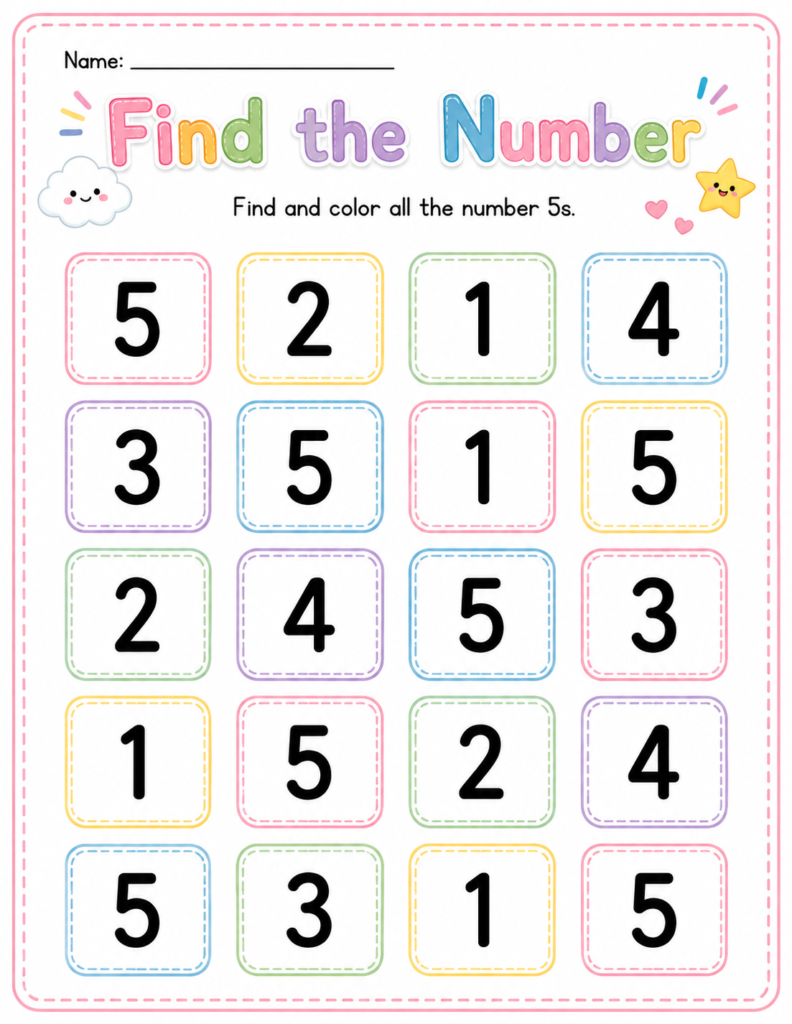
Yes! Printable worksheets can be a helpful tool when combined with hands-on learning. Activities such as tracing numbers, matching numerals to quantities, and color-by-number pages allow children to practice identifying numbers while also building fine motor skills and attention.