Preschool Tracing Worksheets: How Tracing Builds Early Writing Skills
Early writing skills do not begin with complete words or sentences. They start much earlier, as children learn how to control the small movements of their hands and fingers.
One of the simplest ways to help children build this foundation is through tracing.
From following wide paths and straight lines to tracing curves, shapes, numbers, and letters, preschool tracing worksheets give young children guided practice with many of the movements they will eventually use when writing independently.
Tracing can help children strengthen their hands, improve pencil control, recognize patterns, and become more confident using writing tools. However, it is important to introduce tracing activities in a gradual way that matches a child’s current abilities.
In this article, we will explore how tracing supports early writing development, what children should trace first, and how parents and homeschool families can use tracing worksheets effectively.
What Is Tracing in Early Learning?
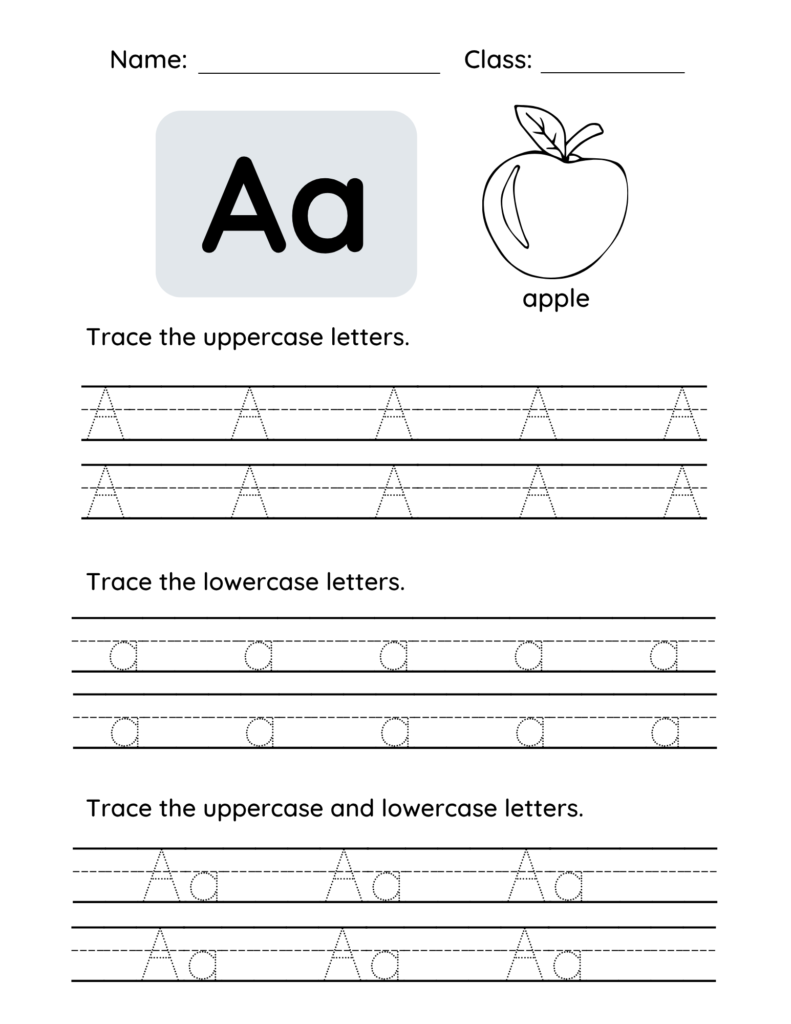
Tracing is an early learning activity in which children follow a line, shape, picture, number, or letter that has already been provided.
Children may trace with:
- Their finger
- A crayon
- A marker
- A pencil
- A paintbrush
- A dry-erase marker
Tracing activities usually begin with large, simple paths. A child might follow a thick straight line from one picture to another or guide a toy car along a curved road.
As their control improves, children can begin tracing narrower lines, patterns, basic shapes, numbers, and letters.
Tracing is not simply copying. It helps children understand movement, direction, spacing, and control—all of which are important parts of learning to write.
Why Are Early Writing Skills Important?
Before children can write letters, words, and sentences on their own, they need to develop several smaller skills.
These include:
- Hand and finger strength
- Pencil control
- Hand-eye coordination
- Visual tracking
- Letter and number awareness
- An understanding of direction
- Confidence using writing tools
Young children need time to develop these abilities. Expecting a child to form letters before they can comfortably draw lines and shapes may lead to frustration.
Tracing gives children a supported way to practice. They can concentrate on moving their hand along a path without also having to remember what the finished shape or letter should look like.
How Tracing Develops Fine Motor Skills
Fine motor skills involve the small muscles in the hands, fingers, and wrists.
Children use these muscles when they:
- Hold a pencil
- Turn the pages of a book
- Use scissors
- Fasten buttons
- Build with small blocks
- Pick up small objects
- Draw and color
Tracing activities encourage children to make controlled movements with their hands and fingers. As they follow lines and paths, their movements gradually become steadier and more precise.
Regular tracing practice can help children:
- Strengthen their fingers
- Improve grip control
- Develop smoother hand movements
- Control how much pressure they place on the page
- Build endurance for future writing activities
These skills can make drawing and writing feel more comfortable and less tiring.

How Tracing Supports Hand-Eye Coordination
Hand-eye coordination is the ability to use visual information to guide hand movements.
When children trace, their eyes follow the path while their hands attempt to stay on or between the lines. They must continually look at where the line is going and adjust their movements.
This skill is also used when children write letters, cut along a line, complete puzzles, catch a ball, and place objects in the correct location.
Tracing worksheets provide children with a clear visual path to follow, giving them repeated opportunities to coordinate what they see with how they move their hands.
What Should Preschoolers Trace First?
Children should not usually begin with small letters or complicated pictures.
A progressive tracing sequence allows them to build control gradually.
A helpful order is:
- Wide paths
- Horizontal lines
- Vertical lines
- Slanted lines
- Curved lines
- Zigzag lines
- Loops and waves
- Simple shapes
- Easy pictures
- Numbers
- Uppercase letters
- Lowercase letters
- Short words and names
Some children may move through these stages quickly, while others may need more time with basic paths and lines.
The goal is not to complete each level by a certain age. The goal is to provide activities that are challenging enough to build skills without becoming overwhelming.

The Role of Tracing Lines in Writing Readiness
Before children learn to trace letters, they need practice controlling the basic strokes used to form them.
Different kinds of tracing lines prepare children for different writing movements.
| Type of Tracing Line | Skill Developed | Future Writing Benefit |
|---|---|---|
| Horizontal lines | Left-to-right movement | Helps form letters such as E, F, and T |
| Vertical lines | Up-and-down control | Helps form letters such as L, H, and I |
| Curved lines | Smooth wrist movement | Helps form letters such as C, O, and S |
| Slanted lines | Diagonal control | Helps form letters such as A, V, K, and W |
| Zigzag lines | Direction changes | Improves accuracy and pencil control |
| Loops and waves | Continuous movement | Prepares children for curved and connected strokes |
Tracing these patterns helps children become familiar with the movements they will later combine to form numbers and letters.
How Tracing Helps With Letter Recognition
Tracing is not only a physical activity. It can also support letter recognition and memory.
When children trace a letter, they see its shape while physically following its lines. This gives them another way to interact with the letter besides simply looking at it.
Letter tracing activities can help children:
- Notice the shape of each letter
- Learn where a letter begins
- Follow the correct stroke direction
- Understand the difference between similar letters
- Practice moving from left to right
- Connect written letters with their sounds
For example, a child may say the letter name and sound while finger tracing it. This combines movement, sight, and sound within one activity.
Tracing should not replace hands-on alphabet learning, letter matching, songs, books, or sound activities. Instead, it can be used alongside them as one part of a broader learning routine.
How Tracing Helps Children Learn Numbers
Number tracing gives children practice recognizing and forming written numerals.
A child may understand that a group contains three objects but still need help learning how to write the numeral 3. Tracing provides a visual guide while the child practices the curved movement required to form it.
Number tracing activities work especially well when they are paired with counting.
For example, children can:
- Count four objects
- Trace the number 4
- Color four pictures
- Build the number with play dough
- Find the number on a number chart
This helps children connect the written numeral with the quantity it represents.
How Tracing Builds Confidence
A blank page can feel intimidating to a beginning writer.
Tracing gives children a clear starting point and a path to follow. Instead of having to create the entire letter or shape independently, they receive gentle guidance.
Completing a tracing activity successfully can help children feel capable and proud of their progress. That confidence may make them more willing to try drawing, copying, and independent writing.
Praise the child’s effort rather than expecting perfect lines.
Helpful comments might include:
- “You worked hard to follow that curve.”
- “Your hand stayed nice and steady.”
- “You remembered to start at the top.”
- “I can see how carefully you traced that line.”
Children do not need to stay perfectly inside every line for the activity to be valuable.
How to Use Preschool Tracing Worksheets Effectively
Tracing worksheets work best when sessions are short, relaxed, and appropriate for the child’s skill level.
Begin With Large Designs
Large paths and shapes are easier for beginners to follow. Avoid worksheets filled with tiny lines or full pages of small letters when a child is just starting.
Demonstrate the Movement First
Show the child where to begin and slowly trace the path with your finger. You can then invite the child to finger trace before using a crayon or pencil.
Use Short Writing Tools
Short crayons, broken crayons, and small pencils can sometimes be easier for young children to control because they encourage the child to use their fingers rather than gripping with their entire hand.
Keep Practice Brief
Five to ten minutes of focused practice may be plenty for a preschooler. Stop before the child becomes tired or frustrated.
Reuse Favorite Pages
Place tracing worksheets inside a dry-erase sleeve or page protector. Children can complete the same activity several times using a dry-erase marker.
Allow Different Materials
Tracing does not always have to be completed with a pencil. Let children use crayons, markers, chalk, finger paint, or a paintbrush dipped in water.
Fun Tracing Activities Without Worksheets
Printable tracing worksheets are helpful, but children also benefit from hands-on activities.
Try these simple tracing ideas:
- Trace lines in a tray of sand or salt
- Draw shapes in shaving cream
- Trace letters made from play dough
- Follow chalk paths outside
- Drive toy cars along printed roadways
- Trace shapes with a paintbrush and water
- Follow yarn lines placed on a table
- Finger trace large letters on textured cards
- Trace around blocks, lids, and cookie cutters
- Draw paths between stickers placed on paper
These activities make tracing feel playful while still strengthening important early writing skills.
When Should Children Move Beyond Tracing?
Tracing is a stepping stone rather than the final goal.
Once a child can comfortably follow a shape, number, or letter, begin providing opportunities to copy it.
A simple progression is:
Finger trace → trace with a writing tool → copy beside a model → write independently
For example, a worksheet might include:
- One large letter to finger trace
- Two dotted letters to trace
- One solid letter to copy
- A blank space for independent practice
Children may still return to tracing when learning a new or difficult letter. They do not have to stop tracing completely before beginning to copy.
Signs a Child May Be Ready for Letter Tracing
A child may be ready to begin tracing letters when they can:
- Hold and use a crayon comfortably
- Follow simple paths
- Draw vertical and horizontal lines
- Copy basic shapes
- Recognize some letters
- Follow simple directions
- Participate in a short table activity without becoming frustrated
If letter tracing feels too difficult, return to larger paths, line tracing, drawing, and hands-on fine motor activities.
Should Tracing Worksheets Be Used Every Day?
Tracing worksheets can be used regularly, but they should not be the only way children practice writing skills.
Young children also need opportunities to:
- Draw freely
- Color pictures
- Paint
- Build with blocks
- Use play dough
- Cut with scissors
- Complete puzzles
- Scribble and pretend to write
- Create cards, lists, and signs
A balanced homeschool routine may include a short tracing activity followed by drawing, sensory play, or a meaningful writing experience.
For example, a child might trace the letter B and then draw a picture of a bear or make a birthday card.
Choosing the Best Preschool Tracing Worksheets
Look for tracing pages that include:
- Large, clear paths
- Thick lines for beginners
- Plenty of white space
- Age-appropriate pictures
- Clear starting points
- Directional arrows when needed
- A gradual increase in difficulty
- Short activities that do not feel overwhelming
Avoid pages that include too many small images, crowded lines, or long rows of repeated letters. A few thoughtful practice opportunities are often more useful than an entire page of repetition.Choosing the Best Preschool Tracing Worksheets
Look for tracing pages that include:
- Large, clear paths
- Thick lines for beginners
- Plenty of white space
- Age-appropriate pictures
- Clear starting points
- Directional arrows when needed
- A gradual increase in difficulty
- Short activities that do not feel overwhelming
Avoid pages that include too many small images, crowded lines, or long rows of repeated letters. A few thoughtful practice opportunities are often more useful than an entire page of repetition.
Like these in this post!

Frequently Asked Questions About Preschool Tracing Worksheets
What age should children start tracing worksheets?
Many children begin simple tracing activities during the preschool years, but readiness matters more than age. A child may be ready when they can hold a crayon comfortably, follow a simple path, and show interest in drawing or writing.
Beginners should start with wide paths, large pictures, and basic straight or curved lines before moving on to letters and numbers.
What should preschoolers learn to trace first?
Preschoolers should usually begin with simple lines and paths rather than letters.
A helpful progression is:
- Wide paths
- Horizontal and vertical lines
- Slanted lines
- Curved lines
- Zigzags and waves
- Basic shapes
- Numbers
- Uppercase letters
- Lowercase letters
- Names and simple words
This gradual progression helps children develop control before attempting more complicated writing movements.
Are tracing worksheets good for preschoolers?
Tracing worksheets can be helpful when they are age-appropriate and used alongside hands-on learning activities.
They can support pencil control, fine motor development, hand-eye coordination, letter recognition, and writing confidence. However, tracing should not replace drawing, coloring, sensory play, cutting, building, or opportunities for children to experiment with writing independently.
Does tracing help children learn to write?
Tracing can help children practice many of the movements used in writing. It gives them a visual path to follow while they learn how to control a pencil, change direction, form curves, and stay within a designated space.
Children should gradually move from tracing to copying and then to writing independently.
How often should preschoolers practice tracing?
Short tracing sessions a few times each week may be more effective than long daily worksheets.
Many preschoolers only need five to ten minutes of focused practice at a time. Stop the activity if the child becomes tired, frustrated, or loses interest.
Should children trace letters or shapes first?
Most children benefit from tracing lines and shapes before tracing letters.
Shapes help children practice the same strokes used to form letters. For example, circles prepare children for letters such as O and C, while slanted lines support letters such as A, V, and W.
Should preschoolers use pencils for tracing?
Preschoolers do not have to begin with pencils. Chunky crayons, short crayons, washable markers, chalk, and dry-erase markers may be easier and more enjoyable for beginners.
Finger tracing is also a helpful first step because it allows children to practice the movement before controlling a writing tool.
How can I make tracing more fun?
Tracing can be made more engaging by using different materials and playful themes.
Children can:
- Trace roads with toy cars
- Draw lines in sand or salt
- Trace shapes with finger paint
- Use a dry-erase sleeve
- Follow paths between animals or favorite objects
- Trace letters with a paintbrush and water
- Use several crayon colors on the same line
Choose activities that match the child’s interests and keep practice relaxed.
What if my child cannot stay on the tracing lines?
It is normal for beginners to move outside the lines. Staying perfectly on the path should not be the main goal.
Begin with thicker lines and wider paths, offer larger writing tools, and allow plenty of practice. Praise the child’s effort, steady movements, and willingness to try rather than expecting perfect results.
Tracing Workbooks to Support Early Writing Skills
Tracing worksheets and workbooks can give young children extra practice developing pencil control, following lines, forming shapes, and preparing to write letters and numbers. The following workbooks offer a gradual and engaging way to add tracing practice to your homeschool routine.
1. Kumon My First Book of Tracing
Kumon My First Book of Tracing is designed for young beginners who are still developing basic pencil control. The activities gradually introduce children to following paths and tracing different types of lines before moving toward more detailed movements.
This workbook is a good choice for children who are not yet ready to begin formal letter tracing. The revised edition is designed for approximately ages 2 to 4 and contains 80 pages of progressive tracing practice.
Best for: Beginning pencil control and first tracing practice
2. Carson Dellosa Trace With Me: Pre-Handwriting Practice
Trace With Me: Pre-Handwriting Practice focuses on the strokes and movements children need before they begin writing letters. Its activities include lines, curves, circles, and other early tracing patterns that strengthen pre-writing skills.
This workbook works especially well after children have had some experience coloring and drawing but still need practice following a defined path.
Best for: Pre-writing strokes, lines, curves, and shapes
3. My First Learn-to-Write Workbook by Crystal Radke
My First Learn-to-Write Workbook combines pencil-control activities, line tracing, shapes, letters, and other early writing exercises. The variety makes it a helpful choice for children who are ready to progress from basic paths into letter and number practice.
A wipe-clean edition is also available for families who want children to repeat the activities without using a new page each time.
Best for: Progressing from lines and shapes to letters and numbers
4. Preschool Tracing and Pen Control by Highlights
Preschool Tracing and Pen Control combines traditional tracing practice with mazes, puzzles, and Hidden Pictures activities. These playful exercises help children practice controlling a pencil without making every page feel like handwriting practice.
It is a strong option for children who enjoy activity books and may lose interest when asked to trace long rows of lines or letters.
Best for: Playful tracing practice and children who enjoy puzzles
5. School Zone Tracing Trails Workbook
School Zone Tracing Trails includes preschool-level pre-writing practice along with introductions to shapes, numbers, and letters. The activities are designed for children ages 3 to 5 and provide a manageable introduction to several early writing skills.
With 32 pages, it is less overwhelming than a large all-in-one workbook and may be a good choice for short homeschool lessons, quiet time, or additional practice.
Best for: Short lessons and a simple introduction to tracing
Choosing the Right Tracing Workbook
When choosing a tracing workbook, consider what your child can comfortably do now.
A child who is just beginning should start with large paths and simple lines. Children with more pencil control may be ready for shapes, numbers, uppercase letters, and lowercase letters.
The best workbook is not necessarily the one with the most pages. Look for activities that offer plenty of space, progress gradually, and keep practice enjoyable. Tracing sessions should remain short and should be balanced with coloring, drawing, play dough, cutting, and other hands-on fine motor activities.
If you like this blog post, check out our free tracing worksheets here!
Or grab it here!