Fine Motor Skills for Preschoolers: Simple Activities to Build Hand Strength
Fine motor skills for preschoolers are the small hand and finger movements children use when they cut, color, glue, trace, draw, and begin using pencils or crayons with more control. These early skills are important because they help children strengthen their hands, improve finger coordination, and get ready for everyday tasks like buttoning, turning pages, using scissors, and eventually writing letters and numbers.
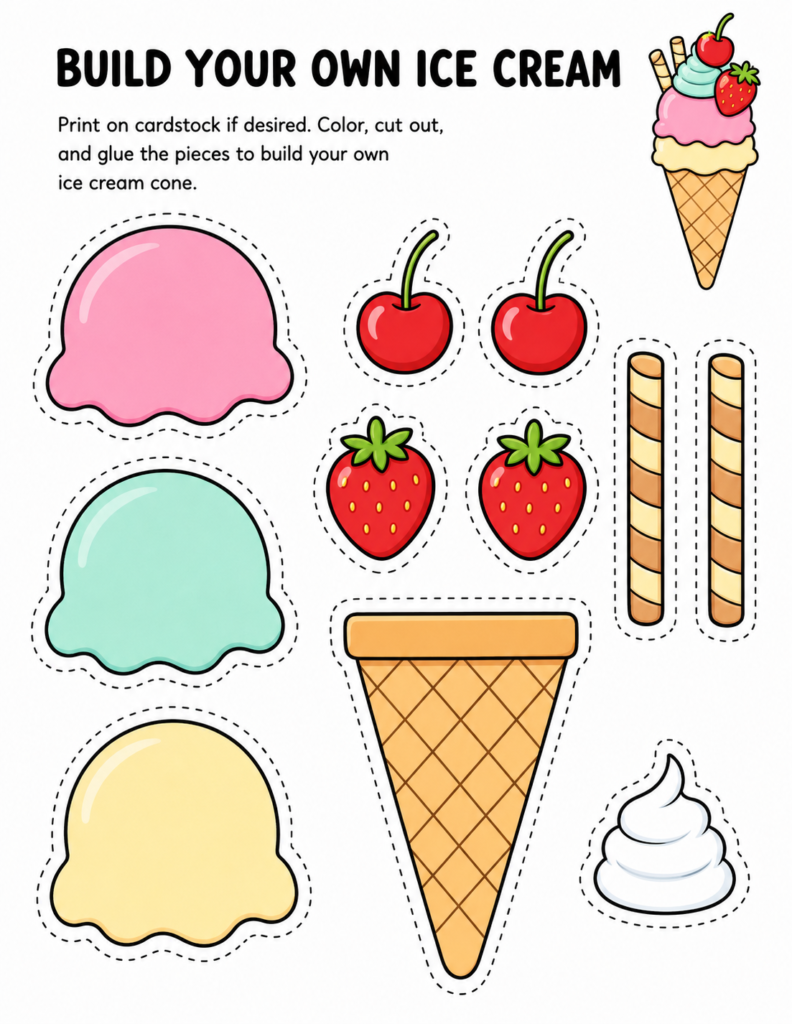
One simple and playful way to support fine motor skills for preschoolers is with cut and paste worksheets. Activities like a build your own popsicle or build your own ice cream page give children a chance to color the pieces, cut them out, pick them up, place them where they belong, and glue them together to create a fun finished picture. While it may feel like a simple summer activity, children are actually practicing hand strength, hand-eye coordination, scissor skills, visual tracking, and focus all at the same time.
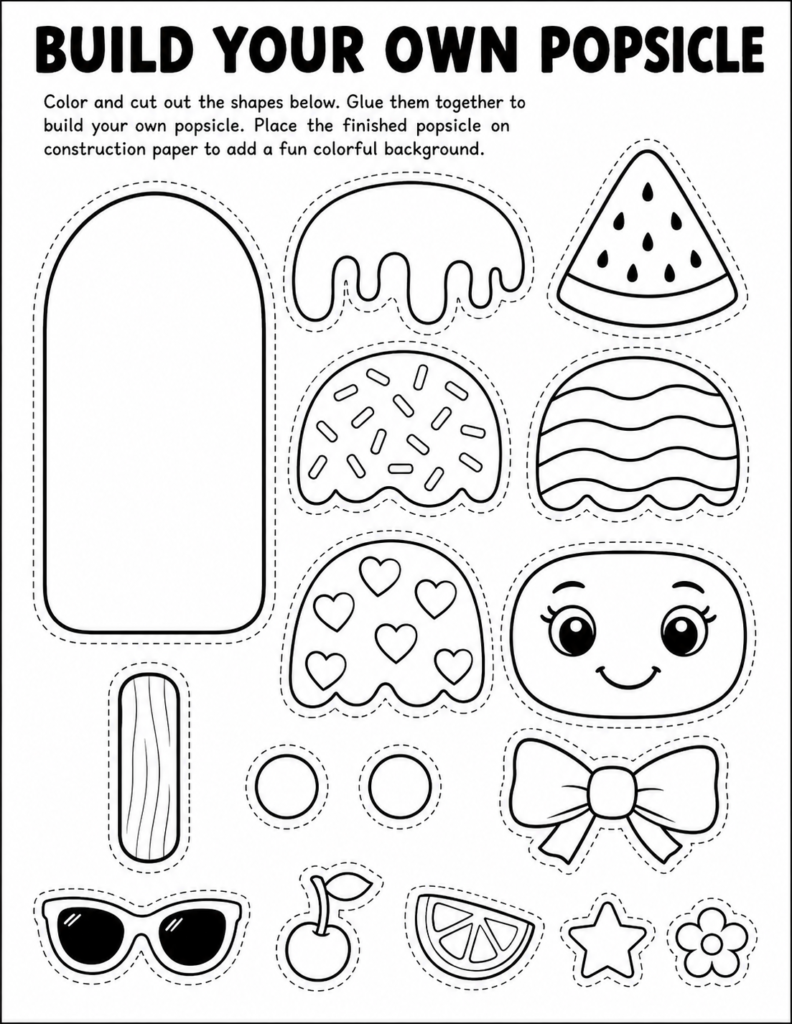
These kinds of hands-on worksheets can also make fine motor practice feel more exciting for young learners. Instead of only tracing lines or practicing pencil strokes, preschoolers get to create something cute they can be proud of. A summer-themed cut and paste worksheet, like building a popsicle or ice cream cone, gives children a fun reason to slow down, use careful movements, and complete each step from coloring to cutting to gluing. That makes it a helpful activity for homeschool preschool, morning work, quiet time, or a simple themed learning day.
What Are Fine Motor Skills?
Fine motor skills are the small movements children make with their hands, fingers, and wrists. These movements help children do everyday tasks and early learning activities.
Preschoolers use fine motor skills when they:
- Hold a crayon or marker
- Color a picture
- Cut paper with scissors
- Glue pieces onto a page
- Peel stickers
- Build with blocks
- Turn book pages
- Zip a jacket
- Button clothing
- Pick up small objects
- Trace lines and shapes
- Begin writing letters and numbers
These little movements may look simple, but they are a big part of helping young children become more independent and confident. Before handwriting feels easy, children need plenty of practice using their hands and fingers in different ways.
Why Fine Motor Skills Matter for Preschoolers
Fine motor skills matter because they help children build the control and strength they need for early learning. When a child colors a page, they are practicing how to hold a crayon and move it across the paper. When they cut out a shape, they are learning how to open and close scissors while following a line. When they glue a piece onto a worksheet, they are practicing careful placement and hand-eye coordination.
These activities support more than just schoolwork. Fine motor skills also help children with everyday routines. Preschoolers use these skills when they open snack containers, put on shoes, turn pages in a book, play with toys, and help with simple tasks around the house.
Fine motor practice does not have to be complicated. In fact, simple activities often work best for young learners. A short cut-and-paste worksheet, a coloring page, a playdough activity, or a few minutes of sticker play can give children meaningful practice without making learning feel overwhelming.
How Cut and Paste Worksheets Support Fine Motor Skills
Cut and paste worksheets are a great way to support fine motor skills for preschoolers because they combine several important skills into one activity.
First, children color the pieces. This helps them practice holding a crayon, moving their hand with control, and building hand strength. Coloring can also help children slow down and pay attention to the details on the page.
Next, children cut out the pieces. Cutting helps strengthen the hands and fingers while also building coordination. Preschoolers have to hold the paper with one hand, use scissors with the other hand, and watch where they are cutting. This takes practice, patience, and focus.
Then, children place and glue the pieces. This step helps with hand-eye coordination, visual-motor skills, and spatial awareness. Children have to look at the page, decide where the pieces should go, turn the pieces if needed, and glue them into place.
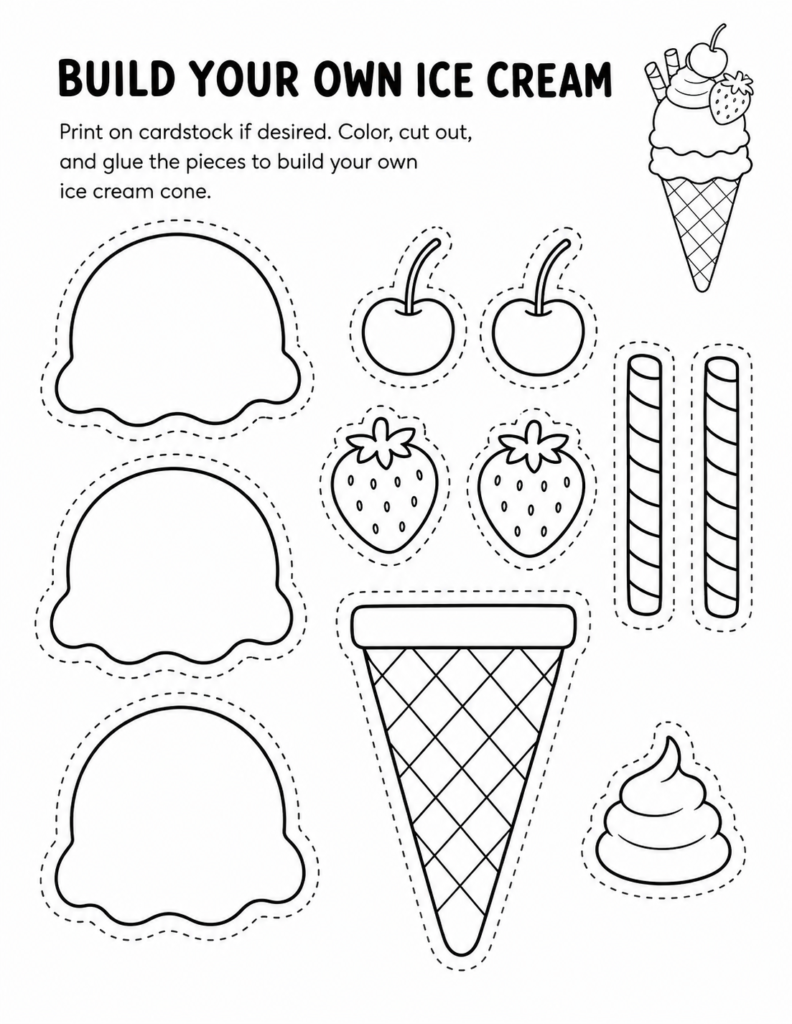
A build your own popsicle, or build your your own ice cream worksheet is a fun example because children can color the popsicle pieces, cut out toppings or decorations, and arrange them to make their own creation. A build your own ice cream worksheet works the same way. Children can choose scoops, toppings, cones, sprinkles, cherries, or other pieces and put them together in their own way.
Easy Fine Motor Activities for Preschoolers
Cut and paste worksheets are helpful, but they are just one way to build fine motor skills. Preschoolers benefit from many different hands-on activities.
Here are some simple fine motor activities you can use at home or in your homeschool day:
- Coloring with crayons or markers
- Cutting paper strips
- Gluing shapes onto a picture
- Peeling and placing stickers
- Playing with playdough
- Rolling playdough into balls or snakes
- Using tongs to pick up pom-poms
- Stringing large beads
- Building with blocks
- Completing simple puzzles
- Tearing paper for crafts
- Using dot markers
- Tracing lines and shapes
- Sorting small objects by color
- Drawing with sidewalk chalk
These activities help children use their hands in different ways. Some activities build strength. Some build coordination. Others help with control, focus, or careful movement.
Fine Motor Skills and Early Writing
Fine motor skills are closely connected to early writing. Before children can write letters, numbers, or their names, they need to feel comfortable using their hands and fingers with purpose.
A child who has practiced coloring, tracing, cutting, gluing, and building may have an easier time holding a pencil and moving it across the page. These activities help children build the hand strength and control they need for handwriting later on.
That does not mean preschoolers need to rush into formal handwriting. Many children need time to scribble, color, trace, cut, glue, and play before letters begin to feel natural. Fine motor activities give children the foundation they need in a gentle and playful way.
Cut and paste worksheets are especially helpful because they give children practice with both hands. One hand holds the paper while the other hand cuts. One hand holds the glue stick while the other hand places the piece. These small movements help children learn how to coordinate both sides of the body, which is useful for writing and many other learning tasks.
Tips for Using Cut and Paste Worksheets with Preschoolers
When using cut and paste worksheets with preschoolers, keep the activity simple and encouraging.
Start with large shapes and thick cutting lines. Bigger pieces are easier for little hands to manage. A popsicle, ice cream cone, sun, beach ball, or simple animal shape can be easier than tiny detailed pieces.
Let children color first if they want to. Coloring before cutting gives them extra hand-strength practice and makes the finished project feel more personal.
Offer help when needed. Some preschoolers may be ready to cut independently, while others may need an adult to cut the pieces out or help guide the scissors. That is okay. The goal is practice, not perfection.
Use glue sticks when possible. Glue sticks are usually easier for preschoolers to control than liquid glue. They also give children another chance to practice gripping, twisting, pressing, and moving their hands.
Most importantly, celebrate the finished project. Whether the pieces are straight, crooked, upside down, or covered in extra glue, your child is still practicing important skills.
Fine Motor Skills for Homeschool Preschool
Fine motor practice fits easily into a homeschool preschool routine. You can add a short fine motor activity to morning time, themed lessons, quiet time, or a simple weekly worksheet basket.
For a summer theme, you might use build your own popsicle, build your own ice cream, beach bucket, watermelon, lemonade stand, or sunshine cut-and-paste pages. These activities feel fun and seasonal while still giving children meaningful practice.
You can also pair cut and paste worksheets with books, songs, sensory bins, or pretend play. For example, after reading a summer story, your child could build a popsicle craft. After talking about favorite treats, they could make an ice cream cone worksheet. These simple connections help learning feel playful and memorable.
Final Thoughts
Fine motor skills for preschoolers are an important part of early learning. These small hand and finger movements help children get ready for writing, cutting, coloring, tracing, gluing, and everyday independence.
Cut and paste worksheets are a simple way to support fine motor development because they combine coloring, cutting, placing, and gluing into one fun activity. A build your own popsicle or build your own ice cream worksheet may look like a cute seasonal craft, but it also helps children practice hand strength, finger control, scissor skills, hand-eye coordination, and focus.
With short, playful activities, preschoolers can build confidence one little cut, color, and glue stick moment at a time.
Frequently Asked Questions About Fine Motor Skills for Preschoolers
What are fine motor skills for preschoolers?
Fine motor skills for preschoolers are the small hand, finger, and wrist movements children use for everyday tasks and early learning activities. These skills help children color, cut, glue, trace, draw, build, button, zip, turn pages, and begin using crayons or pencils with more control.
Why are fine motor skills important for preschoolers?
Fine motor skills are important because they help preschoolers build hand strength, finger control, coordination, and independence. These skills support early writing, scissor practice, coloring, crafts, self-help skills, and many everyday tasks children use at home, in preschool, and during homeschool activities.
Do cut and paste worksheets help with fine motor skills?
Yes, cut and paste worksheets can help support fine motor skills for preschoolers. When children color, cut out pieces, pick them up, place them on the page, and glue them down, they are practicing hand strength, scissor skills, hand-eye coordination, visual tracking, and careful finger movements.
What are some easy fine motor activities for preschoolers?
Easy fine motor activities for preschoolers include coloring, cutting paper strips, gluing shapes, playing with playdough, peeling stickers, using dot markers, stringing large beads, building with blocks, completing puzzles, tearing paper for crafts, tracing lines, and using tongs to pick up small objects.
How do fine motor skills help with handwriting?
Fine motor skills help children build the hand strength and control they need before handwriting. Before a child can write letters or numbers, they need practice holding crayons, making lines, tracing shapes, cutting, coloring, and using their hands with purpose. These early activities help prepare children for writing in a gentle way.
What age should children start working on fine motor skills?
Children begin building fine motor skills as babies and toddlers, but preschool is a wonderful time to practice these skills through play. Around ages 3 to 5, many children enjoy coloring, playdough, stickers, simple cutting practice, puzzles, tracing, and hands-on activities that strengthen little hands.
Should preschoolers use scissors?
Many preschoolers can begin using child-safe scissors with adult supervision. Some children may start by cutting simple paper strips, while others may need help holding the scissors or turning the paper. Start with large shapes, thick cutting lines, and simple cut-and-paste activities so children can build confidence slowly.
How often should preschoolers practice fine motor skills?
Preschoolers can practice fine motor skills a little bit each day through simple activities. Short, playful practice often works best. A few minutes of coloring, cutting, gluing, playdough, stickers, or tracing can be very helpful without making the activity feel too long or frustrating.
What if my child gets frustrated with cutting or tracing?
If your child gets frustrated, make the activity easier and offer help. You can pre-cut some of the pieces, use larger shapes, switch to coloring or stickers, or let your child glue pieces that you cut out. Fine motor skills take time to develop, and the goal is to build confidence, not create a perfect finished page.
Are fine motor skills the same as pre-writing skills?
Fine motor skills are one important part of pre-writing skills, but they are not the only part. Pre-writing skills also include hand-eye coordination, visual tracking, pencil control, line formation, shape drawing, and confidence with early writing tools. Fine motor activities like cutting, coloring, gluing, and playdough help support the foundation children need before handwriting.
If your child enjoys hands-on practice, these fine motor books and workbooks can give you extra ideas for cutting, tracing, coloring, and early writing practice. They can be used alongside simple cut-and-paste worksheets, playdough, stickers, and everyday fine motor activities.
5 Books and Workbooks That Help Build Fine Motor Skills
1. My First Scissor Skills Workbook: Cut-and-Paste Activities to Build Hand-Eye Coordination and Fine Motor Skills
This workbook is a strong fit for preschoolers because it focuses directly on cutting and pasting, which pairs perfectly with your cut-and-paste worksheet angle. It’s designed for ages 3–5 and uses progressive cutting activities to help children build confidence with scissors.
2. Scissor Skills Preschool Workbook for Kids
This workbook includes cutting practice with animals, shapes, and patterns. It’s a nice option for children who need more practice using scissors safely while following simple lines and shapes.
3. Play Smart Cutting and Pasting Age 2+
This workbook is helpful for younger preschoolers or toddlers who are just starting with cutting and pasting. It includes colorful pages and sticker-style activities, which can make fine motor practice feel more playful.
4. My First Learn-to-Write Workbook
This workbook is a good bridge from fine motor practice into early writing. It includes pen control, line tracing, and handwriting-style exercises that can help children practice moving a pencil with more purpose.
5. Pre-Writing Skills Workbook for Kids: Tracing Lines, Shapes and Animals
This workbook is a good fit if you want something that connects fine motor skills with pre-writing practice. Children can trace lines, shapes, and simple animal-themed paths while building hand control, coordination, and early writing confidence.
If you like this blog post, make sure to check out our free alphabet tracing worksheets here!